.jpg)
Battery storage has become a central part of the energy system. As renewable energy capacity grows and electricity consumption rises through electrification, we need flexible solutions that can balance production and consumption.
This is where grid-scale battery energy storage systems (BESS) come in. They’re large-scale energy storage systems based on battery technology.
In this article, we cover:
A grid-scale battery storage system typically refers to a battery-based energy storage installation with a capacity of at least one megawatt, designed to actively participate in electricity markets and support the functioning of the power system.
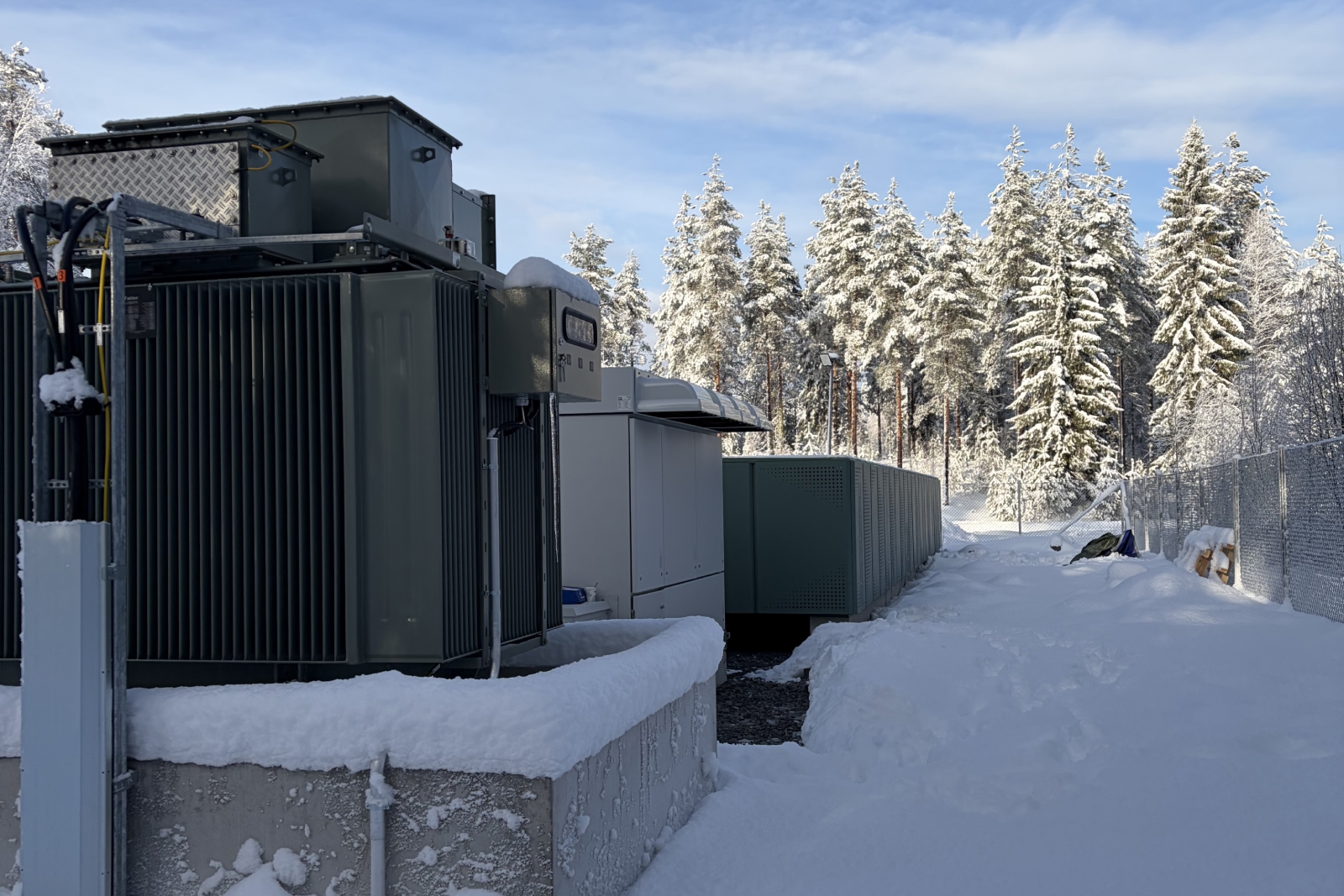
One practical threshold for defining the scale of battery storage projects relates to grid connection requirements. Across European markets, the specific technical requirements and permitting processes for storage systems vary by country and grid operator, but a common distinction is made between smaller, simpler installations and larger grid-connected systems subject to more demanding technical requirements and testing. Larger systems typically must meet grid support capability requirements set by the national transmission system operator (TSO). In Finland, for example, Fingrid distinguishes between two categories: storage systems below 1 MW (Type A) are subject to lighter technical requirements and a simpler commissioning process, while systems of 1 MW and above (Type B) face additional testing obligations and grid support capability standards.
Many grid-scale projects fall within the 1–50 MW range. Smaller systems are also actively used in electricity markets: through software aggregation, multiple batteries can be combined into a virtual unit. This allows companies with smaller storage systems to participate in markets as well.
Grid-scale projects are often standalone battery storage systems built on dedicated sites, connected directly to the distribution or transmission grid, with their primary purpose being active participation in electricity markets.
However, a system can also be located at an industrial or commercial facility, where in addition to market participation it can shave consumption peaks and shift electricity usage to lower-cost hours.
If a battery storage system is co-located with a generation asset, such as wind, solar, or hydro, and operated under a shared controller, the combined installation is referred to as a hybrid power plant.

The power system is changing rapidly. Renewable energy generation from wind and solar fluctuates with weather conditions, while electricity consumption is growing due to electrification and the rise of data centres.
Battery storage helps balance this picture.
Storage systems can, for example:
Many larger battery storage projects are investments aimed at generating returns from electricity markets. Historically, a significant share of revenues has come from ancillary service and reserve markets, where the TSO compensates storage operators for their capacity and response. Essentially this means paying for the battery's ability to charge or discharge on demand to balance the grid.
Going forward, revenues are increasingly expected to come from wholesale electricity markets and from managing local grid congestion.
Beyond broad market participation and transmission grid support, grid-scale storage also delivers local benefits. When local capacity constraints arise in the distribution network, a storage system can serve as a fast and cost-effective alternative to reinforcing the grid. This benefits local distribution network operators.
For facilities with significant electricity consumption, a battery storage system can also reduce demand charges by cutting consumption peaks, on top of any market participation revenues.
Completing a grid-scale project requires close coordination across many different areas.
The starting point varies considerably: some customers have only an early-stage idea, while others already have a site and a grid connection secured.
A typical project progresses roughly as follows:
The first step is establishing the basic prerequisites for a project:
In many grid-scale projects, the goal is a dedicated grid connection for the battery storage system, particularly when the customer does not have an existing facility with sufficient electricity consumption. If the storage system is also intended to serve a building or facility, a shared connection may be appropriate. Where the goal is to install storage at an existing site, the installation can be designed based on the existing electrical infrastructure.
Obtaining or upgrading a grid connection is the project owner's responsibility. Connection requirements, approval processes, and lead times vary by country and region, and should be investigated early in the project, as they can significantly affect both timelines and site selection.
Note: In Finland, Fingrid introduced a new approval process from 1 June 2026 for grid connections above certain thresholds. Other countries have their own TSO-level approval and connection processes. Always engage with your local DSO and TSO at an early stage.
The next phase involves the permitting process. In most cases, at least a building or construction permit is required, applied for from the relevant local authority.
Permit applications typically require documents such as a site plan and technical specifications. Permitting is the project owner's responsibility. When delivering a project together with us, Cactos provides the necessary storage-related documentation and supports the customer throughout the permitting process.
At this stage, discussions are often held with:
Permitting timelines vary by jurisdiction. As a general rule, it is wise to begin this process early and in parallel with other preparatory work.
Once permits and grid connection are in place, construction can begin. In Cactos's grid-scale projects, the customer is generally responsible for civil works and foundations.
The implementation phase typically includes:
Once the battery system is commissioned, the required technical tests are carried out to comply with the TSO's grid code requirements for storage systems. The local DSO approves the test reports, after which the storage system can begin commercial operation in the wholesale electricity markets (day-ahead and intraday).
Participation in reserve and ancillary services markets additionally requires approval of the relevant test reports by the TSO. Following approval, the storage system can also participate in those markets.
After commissioning, the system moves into normal operations and begins generating value in the electricity markets. The average duration of Cactos's grid-scale projects is 9 months from kick-off to commissioning.
Once the battery storage project is complete, value is generated through ongoing operation.
This includes:
Modern battery storage systems operate largely automatically, with software optimising battery usage based on market conditions and grid needs.
Many storage operators outsource software, but Cactos offers a full-service model: we build, install, and operate battery storage systems. Our own software, Cactos Spine, is developed in Finland and fully managed by Cactos. This makes it a cybersecure platform that enables optimal storage performance 24/7.
It is also essential that a battery storage system operates reliably so that it can generate value for its owner over the long term. Cactos offers a comprehensive full warranty for its storage systems: 10 years for storage systems acquired through leasing, and 2 years for direct purchases (extendable for an additional fee).
The role and market for battery storage have grown rapidly. As markets develop, project profitability increasingly depends on the ability to participate flexibly across different electricity markets, as well as on the speed, quality, and cost-efficiency of project delivery. Read more about battery storage as an investment and the future of returns here.
While many projects to date have focused primarily on ancillary service markets, future opportunities are emerging in areas such as:
The location of storage assets may become increasingly important. Systems sited close to generation or large consumption can offer particularly valuable flexibility to the grid.
Industrial and commercial facilities with large energy consumption also present a strong case for co-located storage, combining market participation with local benefits such as peak shaving. Electricity price volatility is expected to remain a feature of European markets, and managing or reducing demand charges remains economically attractive regardless of how ancillary service revenues develop.
Battery storage technology is evolving rapidly, but one increasingly important consideration is cybersecurity and the origin of control systems.
Battery storage systems form part of critical infrastructure, making the security of their management systems essential for the power system as a whole. Poor cybersecurity can, in the worst case, enable unauthorised access to a storage system's control infrastructure and cause disruption to the electricity grid, with potentially serious consequences for society.
For this reason, the origin and security credentials of hardware and software are likely to become an increasingly significant factor in how projects are evaluated and approved both by regulators and project owners. There is a growing conversation at the EU level about restricting the use of control systems of certain origins in critical infrastructure.
Cactos products use only Finnish and European intelligent technology, making us a genuinely cybersecure option.
Grid-scale battery storage systems are a central part of the future energy system. They enable more effective use of renewable energy, help balance the power system, provide local grid flexibility, and open new business opportunities in electricity markets.
Large-scale storage projects are compelling investment opportunities, with an important societal role as economies electrify and renewable energy continues to expand. Grid-scale battery storage is therefore a key part of the future's distributed energy infrastructure.

.jpg)

